Biophilic Design for Health and Well-Being in West Michigan
Inspiring Lakeshore Color palette
Biophilic Design for Health and Well-Being in West Michigan
Design isn’t just about how a space looks — it’s about how it feels, how it functions, and how it impacts our health. At Tranquil Interiors, I believe in designing beyond beautiful — creating interiors that soothe the nervous system, reduce stress, and strengthen our connection with nature.
Through the science of Neuroaesthetics and the principles of Biophilic Design, I craft environments that support true well-being. Whether it’s weaving natural textures, daylight, or organic forms into your home, my process is grounded in research and rooted in serenity.
As a Lakeshore interior designer, I serve homeowners & businesses who care deeply about wellness, longevity, and sustainability. This blog explores how thoughtful, nature-based design can elevate your space — and your life.
Why Beauty Isn’t Enough
For decades, interior design has focused primarily on aesthetics — color palettes, furniture placement, and decorative trends. While a beautiful home can lift our spirits temporarily, the truth is that beauty alone doesn’t support our health.
Research in Neuroaesthetics shows that our environments have a measurable impact on stress levels, mood, cognitive function, and even immune response. When thoughtfully designed, interiors can become tools for well-being, not just decoration.
Consider this: a room with harsh artificial lighting, low air quality, or chaotic patterns can subtly elevate stress hormones. Conversely, spaces that incorporate natural light, soothing textures, and organized flow can lower cortisol, improve focus, and foster a sense of sanctuary.

The Science of Health-Focused Design
Dr. Claudia Miller of the UT School of Environmental Medicine states:
“Architects and Interior Designers have a greater ability to improve public health than medical professionals.”
This is not hyperbole. Every decision in a home or workspace — from lighting and air quality to materials and acoustics — influences physical and emotional health. By intentionally designing interiors with biophilic principles, we can enhance life quality, reduce stress, and improve resilience.
Incorporating nature into spaces isn’t just a trend — it’s a scientifically supported approach that transforms how we experience our homes.
Introducing the Three Pillars of Biophilic Design
Biophilic Design is the integration of natural elements into built environments. It rests on three key pillars that guide every thoughtful interior:
1. Nature in Space
This pillar focuses on incorporating real natural elements directly into interiors.
Indoor plants or views of nature
Elements that engage all five senses
Lighting that supports circadian rhythm and enhances focus
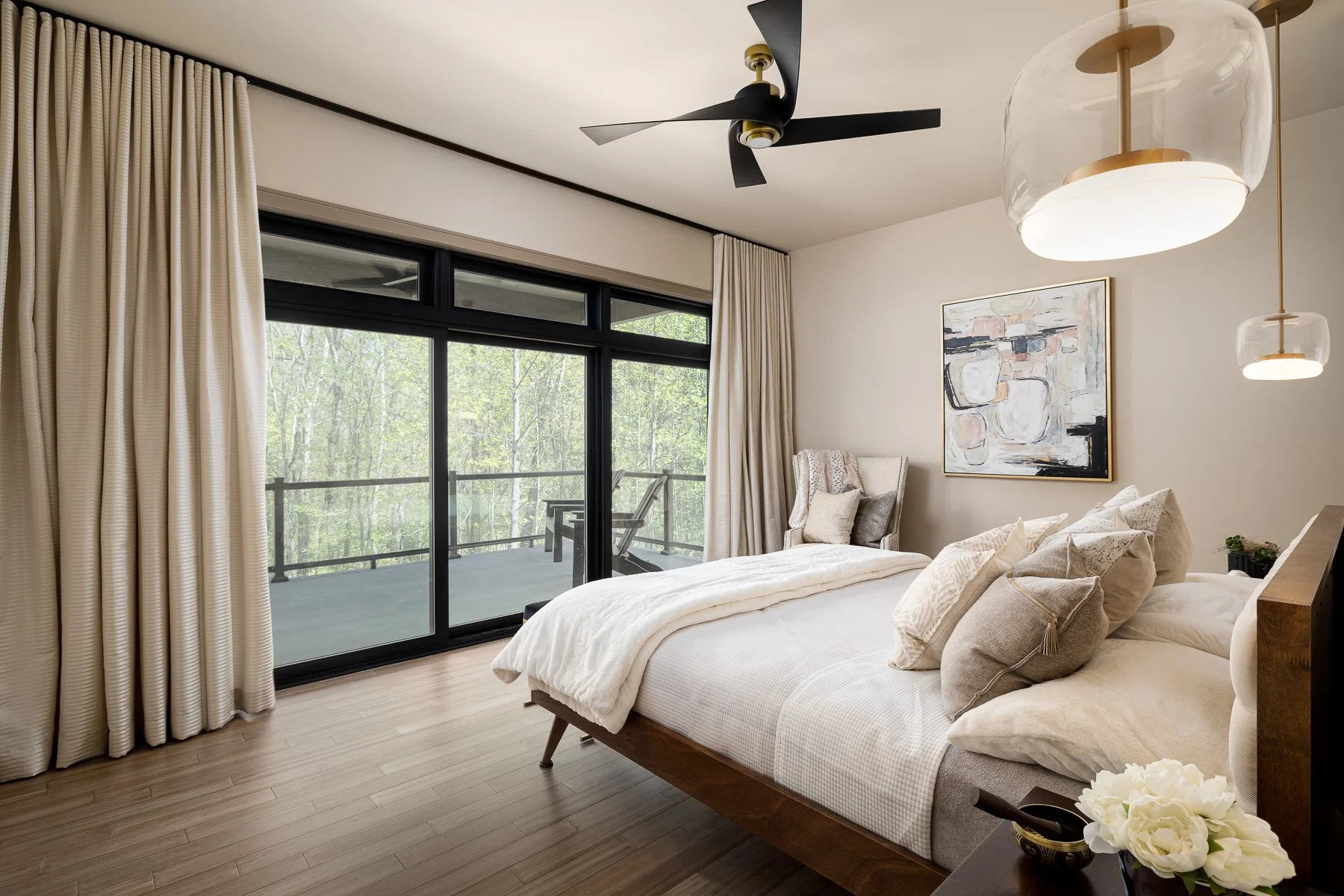
By bringing nature inside, we create visual and sensory connections that restore mental energy and encourage calm. In West Michigan homes, this often means maximizing sunlight from lakeshore-facing windows, layering in native plants, or designing cozy nooks with natural textures like wood or stone.

2. Natural Analogues
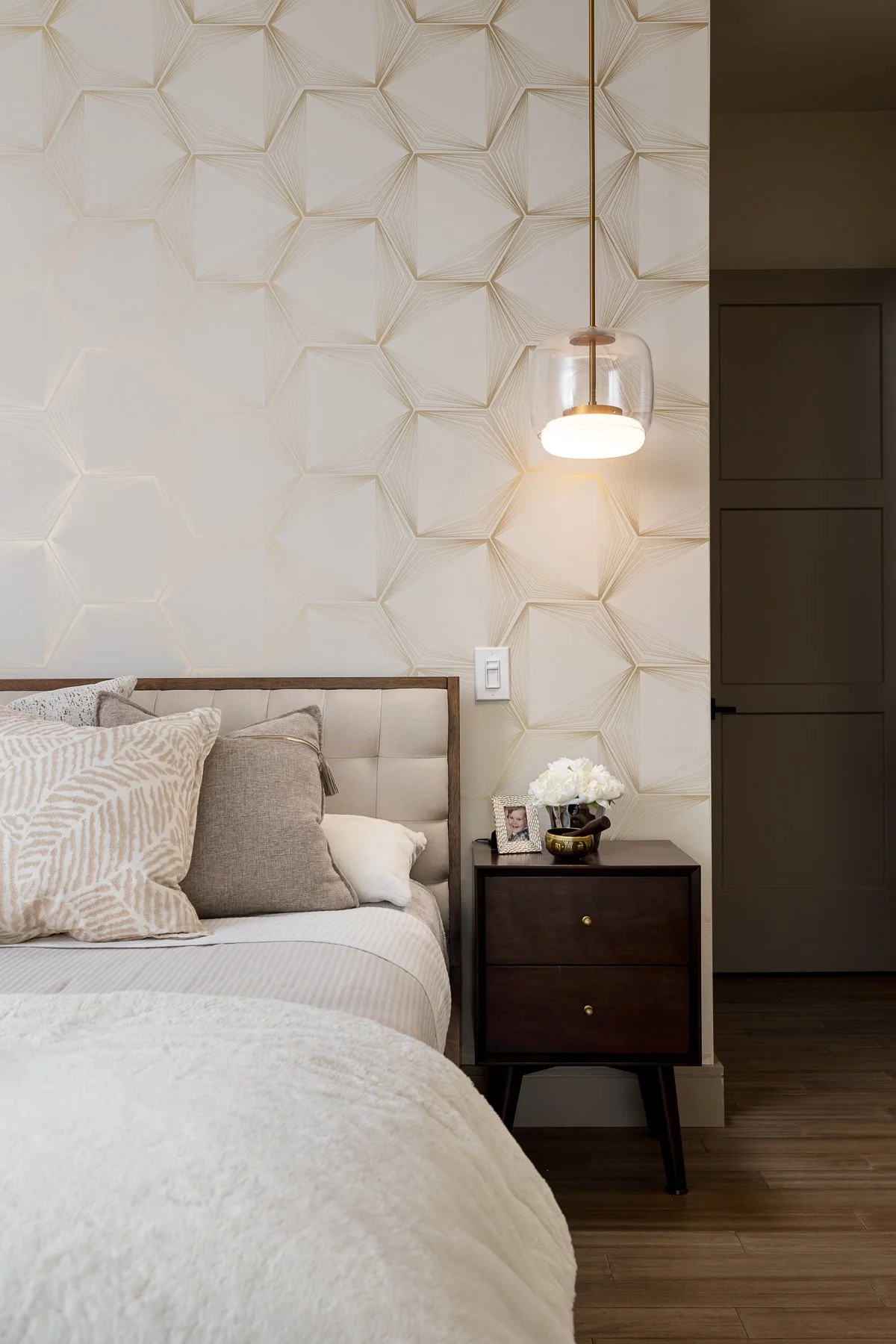
Even when direct nature isn’t possible, we can use materials, patterns, and textures that mimic nature.
Materials, patterns, and textures inspired by nature
Organic wood grains, stone textures, or woven fibers
Flowing lines, curves, and earth-toned color palettes
These elements provide the brain with familiar cues from the natural world, supporting relaxation and a sense of grounding
3. Nature of Space
Spatial arrangement evokes specific feelings
Prospect: Open, flowing layouts that mirror outdoor expansiveness
Refuge: Spaces where you feel protected from behind and overhead
Awe & Mystery: Design elements that elevate pleasure and curiosity
A well-designed area mirrors the balance found in natural ecosystems — a harmony of activity and rest that benefits mental health.
Practical Examples in West Michigan Homes
Lakeshore Retreats:
Don't have a direct view of the lake to enjoy sliding glass doors that open to natural surroundings? Our approach still allows the line between interior and exterior to blur when using natural analogues like wood flooring and stone accents and proper color combinations evoke local landscapes.
Urban Residences:
Even in denser areas, indoor plants, maximizing natural light, and organic textures bring nature inside. Curved furniture layouts create flow reminiscent of natural patterns, promoting calm and ease of movement.
Wellness-Oriented Spaces:
Home offices, gyms, or meditation areas integrate natural materials, daylight, and airflow, improving focus, reducing fatigue, and supporting longevity.
Design is Biological
Every element in a home can influence physiological and psychological responses. By integrating nature and intentional sensory cues, we transform design from decoration to a public health intervention within your own walls.
From lighting that aligns with circadian rhythms to textures that invite touch, we create spaces that work with your body — not against it. This science-driven approach ensures that your home doesn’t just look beautiful; it actively supports well-being.

Why Tranquil Interiors Stands Out
As a West Michigan interior designer, I combine over 30 years of industry expertise with a focus on authenticity, sanctuary, and connection. My approach isn’t about following trends — it’s about understanding you, your lifestyle, and what brings you calm.
Whether it’s a full renovation or a single-room sanctuary, I guide homeowners to design spaces that support health and well-being, while reflecting their personality and environment.
Through services like the Sanctuary Assessment, clients receive personalized guidance on layouts, materials, lighting, and biophilic integration, creating spaces that feel restorative and uniquely theirs.
The Lakeshore Advantage
West Michigan’s natural beauty — the lakes, forests, and dunes — provides an unparalleled canvas for biophilic design. By intentionally reflecting these elements indoors, we connect homes to their surroundings, enhancing sense of place, tranquility, and joy.
Integrating local materials and textures not only strengthens the connection to nature but also supports local artisans and sustainable practices — a win for both people and the planet.
Final Thoughts: Designing Beyond Beautiful
When design is approached thoughtfully, your home can be more than a place to live. It becomes a tool for health, a sanctuary for reflection, and a space that nurtures every aspect of your well-being.
Biophilic Design and Neuroaesthetics provide the framework to achieve this. Nature is not just decoration; it’s a core ingredient in designing spaces that restore, inspire, and elevate everyday life.
Take the Next Step
If you’re ready to transform your home into a sanctuary for well-being, start with a Sanctuary Assessment or discovery consultation. Together, we’ll explore how your space can support your health, reflect your authenticity, and connect you back to those you love through the natural beauty of the lakeshore.
Contact Tranquil Interiors today to begin designing beyond beautiful.
Welcome to the Neuro Design Blog
Leading insights on the connection between interior design and wellbeing.

Deanna Girardot, SIDC
Founder and Principal Interior Designer
Tranquil Interiors
Recent Posts